
-
 Media gallery
-
 Media gallery
-
 Media gallery


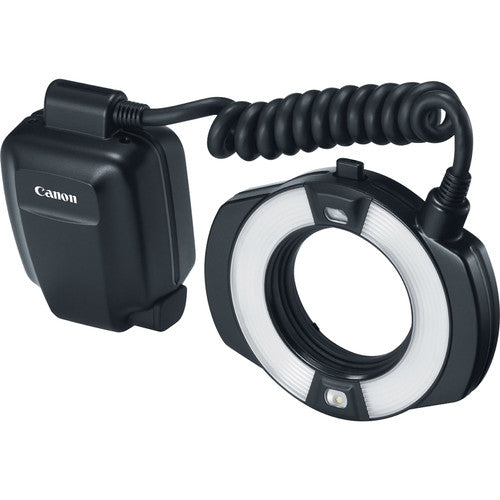
Canon MR-14EX II TTL Macro Ring Lite Flash
- Sale price
- £415.00
- Regular price
-
- Regular price
- £415.00
- Unit price
- per
Est. Shipping : Within 2 Business days
Est. Delivery : Within 5-7 Business days
Couldn't load pickup availability
Product Description
Product Description
Canon MR-14EX II TTL Macro Ring Lite Flash
Precision Lighting for Macro Masterpieces
The Canon MR-14EX II delivers flawless illumination for close-up photography, making it an essential companion for detail-driven shoots. Designed to pair seamlessly with EOS DSLRs, this ring flash ensures even, shadow-free lighting with full TTL compatibility.
Dual-Tube Control
Equipped with dual flash tubes, each adjustable independently, it offers creative control over light distribution and depth. Whether capturing jewelry, insects, or intricate textures, photographers can sculpt the scene with finesse.
Intuitive Interface & Enhanced Ergonomics
Its refined interface features a dot-matrix LCD and easy-access controls, speeding up workflow in the studio or field. The compact controller mounts comfortably, letting you shoot with ease and confidence.
High-Speed Sync & Wireless Master Functionality
Supports high-speed sync (HSS) and functions as a wireless master unit, triggering compatible flashes for complex lighting setups. Versatility meets precision in a compact powerhouse.
Long-Lasting Performance
Powered by 4 AA batteries, it delivers consistent output with impressive recycling times. Built for endurance, this flash won’t falter in demanding sessions.
Ideal For:
- Macro Photography
- Product Shoots
- Scientific Documentation
- Creative Close-Ups
Elevate Your Macro Vision
With the Canon MR-14EX II, minute details transform into visual poetry—turning every tiny subject into a showstopper. Illuminate your world, one marvel at a time.
Canon MR-14EX Specs
| Guide Number | |
| Effective Range | |
| Angle of Coverage | |
| Recycle Time | |
| Exposure Control | |
| Power Range | |
| Secondary Illumination |
| Wireless Operation | |
| Wireless Channels | |
| Wireless Groups |
| Internal Power |
| Mount | |
| Lens Compatibility | |
| Display | |
| Dimensions (W x H x D) | |
| Weight |


Notified by email when this product becomes available

£415.00

Why Choose Us?
Choose Cameriz Limited, your trusted online destination for brand new, top quality camera gear at unbeatable value.
You May Also Like
FREQUENTLY ASKED QUESTIONS
You've Got Any Questions?
At Cameriz Limited, we offer 2 years warranty on Camera, Camera Lens and Camcorders. 6 months warranty on Camera Flash and No warranty on Accessories like, Battery.
We offer a hassle-free return policy. If you're not satisfied with your purchase, you can return it within 14 days for a refund. Product must be in original sealed pack condition to qualify for refund.
Delivery times vary based on your location, but we typically ship within 1-2 business days from the date of order. You'll receive tracking information as soon as your order is dispatched.
