
-
 Media gallery
-
 Media gallery


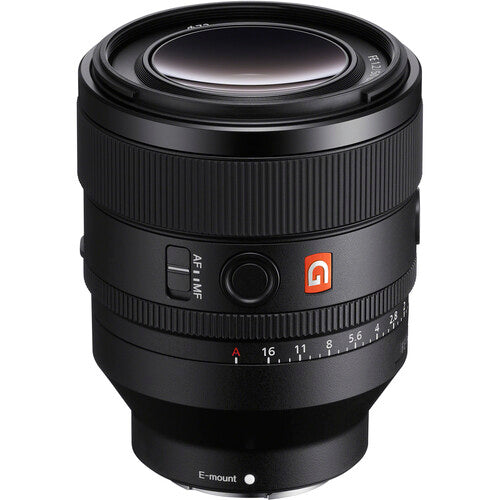
Sony FE 50mm F/1.2 GM Lens
- Sale price
- £1,038.00
- Regular price
-
- Regular price
- £1,038.00
- Unit price
- per
Est. Shipping : Within 2 Business days
Est. Delivery : Within 5-7 Business days
Couldn't load pickup availability
Product Description
Product Description
The Sony FE 50mm f/1.2 GM is characterized by its speed and relatively compact form factor. Also, as a G Master lens, it features an advanced optical design for well-corrected imagery with a high degree of sharpness and clarity. Three XA (Extreme Aspherical) elements provide excellent spherical aberration control by reducing a variety of aberrations, color fringing, and distortion. The lens also sports a dust- and moisture-sealed design and fluorine-coated front lens element to support shooting in inclement conditions. Additionally, these lenses feature robust and intuitive-to-handle physical designs to benefit both photography and cine applications. Notably fast f/1.2 maximum aperture benefits working in difficult lighting conditions and also affords increased control over depth of field. Nano AR Coating II has been applied to reduce surface reflections, flare, and ghosting for increased contrast and color rendering in strong lighting conditions. This updated coating is better suited for larger, curved elements and is especially adept at minimizing internal reflections. This design also contributes to more natural, intuitive Linear Response manual focus control, and an AF/MF switch is located on the lens barrel for tactile control over this setting. Dust- and moisture-sealed design better permits working in inclement conditions and rubberized control rings benefit handling in colder temperatures.
Sony FE 50mm F/1.2 GM Specs
| Focal Length | 50mm |
| Maximum Aperture | f/1.2 |
| Minimum Aperture | f/16 |
| Lens Mount | Sony E |
| Format Compatibility | Full-Frame |
| Angle of View | 47° |
| Minimum Focus Distance | 15.7" / 40 cm |
| Maximum Magnification | 0.17x |
| Optical Design | 14 Elements in 10 Groups |
| Diaphragm Blades | 11, Rounded |
| Focus Type | Autofocus |
| Image Stabilization | No |
| Filter Size | 72 mm (Front) |
| Dimensions (ø x L) | 3.4 x 4.3" / 87 x 108 mm |
| Weight | 1.7 lb / 778 g |

Notified by email when this product becomes available

£1,038.00

Why Choose Us?
Choose Cameriz Limited, your trusted online destination for brand new, top quality camera gear at unbeatable value.
You May Also Like
FREQUENTLY ASKED QUESTIONS
You've Got Any Questions?
At Cameriz Limited, we offer 2 years warranty on Camera, Camera Lens and Camcorders. 6 months warranty on Camera Flash and No warranty on Accessories like, Battery.
We offer a hassle-free return policy. If you're not satisfied with your purchase, you can return it within 14 days for a refund. Product must be in original sealed pack condition to qualify for refund.
Delivery times vary based on your location, but we typically ship within 1-2 business days from the date of order. You'll receive tracking information as soon as your order is dispatched.
